Category: Newsletter

Eliyahu newsletters, reflections, publication updates, and companion resources.

  • After the Unveiling: What Comes Next?

    After the Unveiling: What Comes Next?

    If apocalypse is an unveiling, then eventually the curtain has to finish moving.

    We see something we did not see before. A fracture becomes visible. A story we trusted can no longer carry the weight we placed upon it. A relationship, institution, habit, community, or system looks different once the light reaches it.

    Then comes the harder question: what now?

    Awareness is not responsibility

    One of the dangers of an age saturated with information is that awareness can feel like action. We know what happened. We follow the crisis. We learn the language. We share the article. We identify the failure.

    Sometimes seeing clearly is an achievement. But it is not the end of the work.

    Responsibility asks where our knowledge becomes embodied. What promise needs to be kept? What relationship needs repair? What skill needs to be developed? What community deserves sustained participation? What institution can be strengthened? What boundary needs to be honored? What burden truly belongs to us, and what burden must be carried with others?

    The scale of responsibility matters

    We are not responsible for everything we can see.

    That may be one of the most important disciplines of responsible action. The world can place an infinite number of needs in front of a finite person. If every crisis becomes a personal command, urgency quickly becomes exhaustion, performance, resentment, or despair.

    A more useful question is smaller: where do I have relationship, capacity, obligation, credibility, skill, influence, or the ability to learn?

    Responsibility becomes sustainable when it has a place, a scale, and a practice.

    The next book begins here

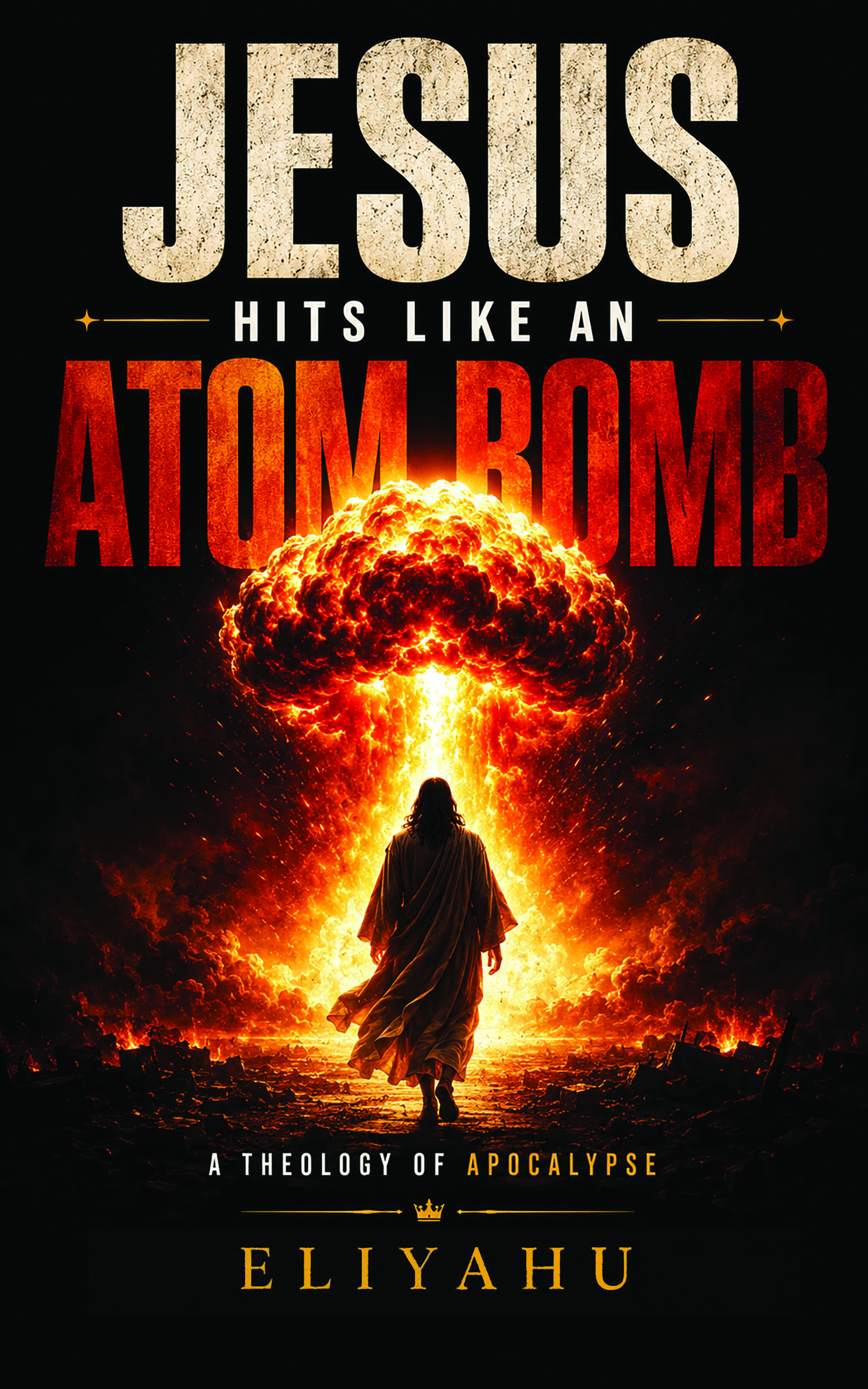
    Jesus Hits Like an Atom Bomb asks what apocalypse reveals and whether we have the courage to rebuild. The next book follows the question that naturally comes after the unveiling.

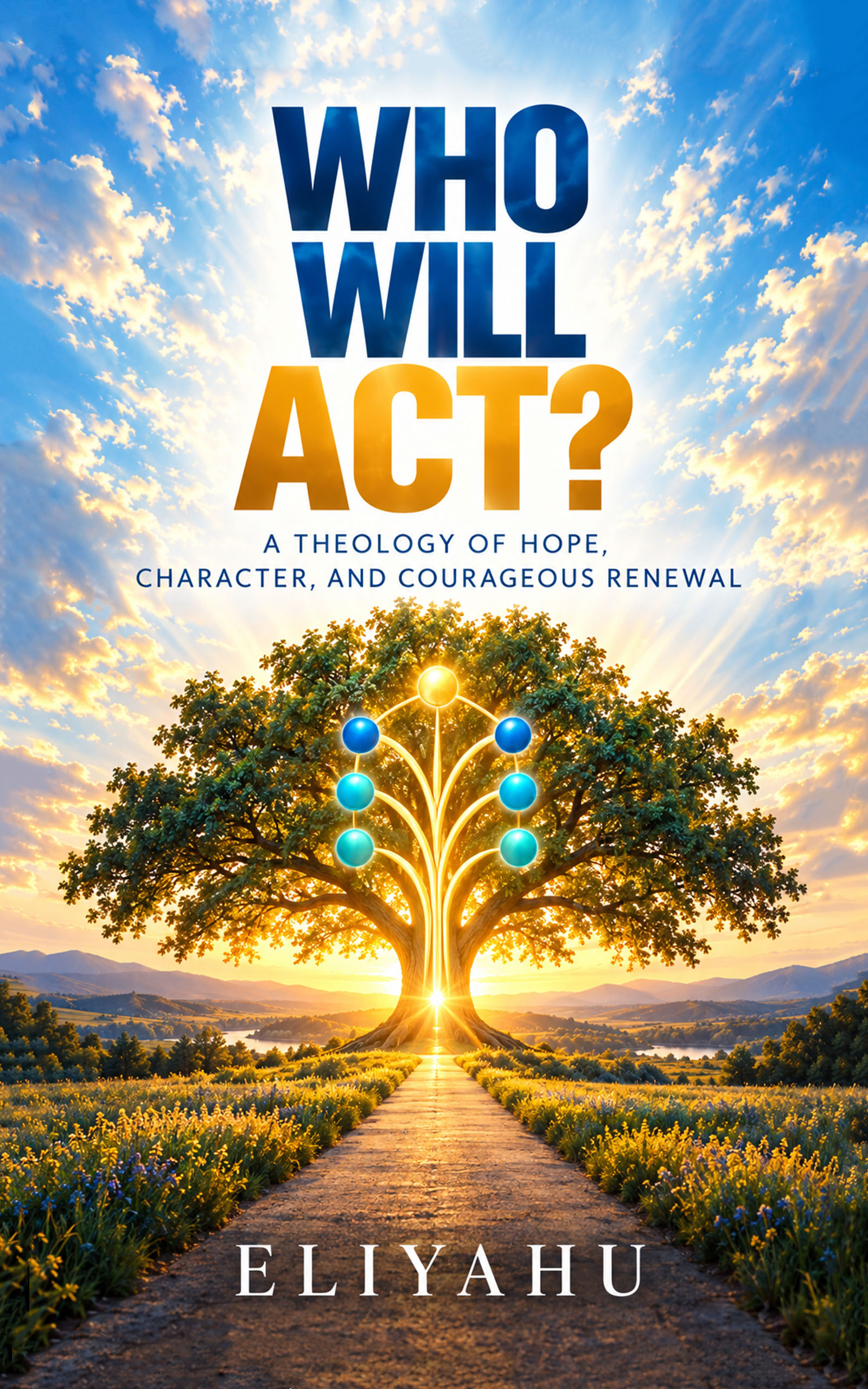
    It is called Who Will Act?
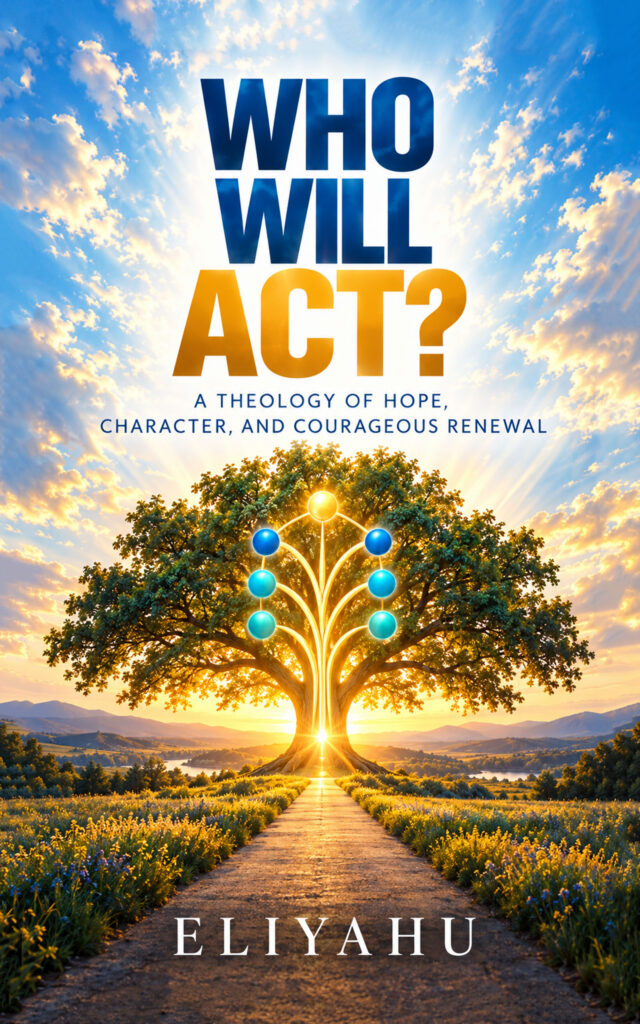
    Cover of Who Will Act? by Eliyahu, featuring a radiant tree and sunlit path

    The book turns from awareness toward personal responsibility, community renewal, and meaningful action. It asks not how one person can fix everything, but how a person can identify what is genuinely theirs to do and begin doing it with enough humility, discipline, and persistence to matter.

    That movement is becoming the larger shape of this work: awakening, responsibility, formation, discernment, and action.

    The next question is not only what has been revealed. The next question is what the revelation requires of us.

    Explore the developing reading path on the Books page.
  • Why I Wrote Jesus Hits Like an Atom Bomb

    Why I Wrote Jesus Hits Like an Atom Bomb

    Why write a book called Jesus Hits Like an Atom Bomb?

    Because the phrase would not leave me alone.

    It carries a theological contradiction in a few words. Jesus is named through the image of a weapon capable of destroying a city. The metaphor is arresting, memorable, and deeply unsettling. That is precisely why it deserves examination rather than repetition.

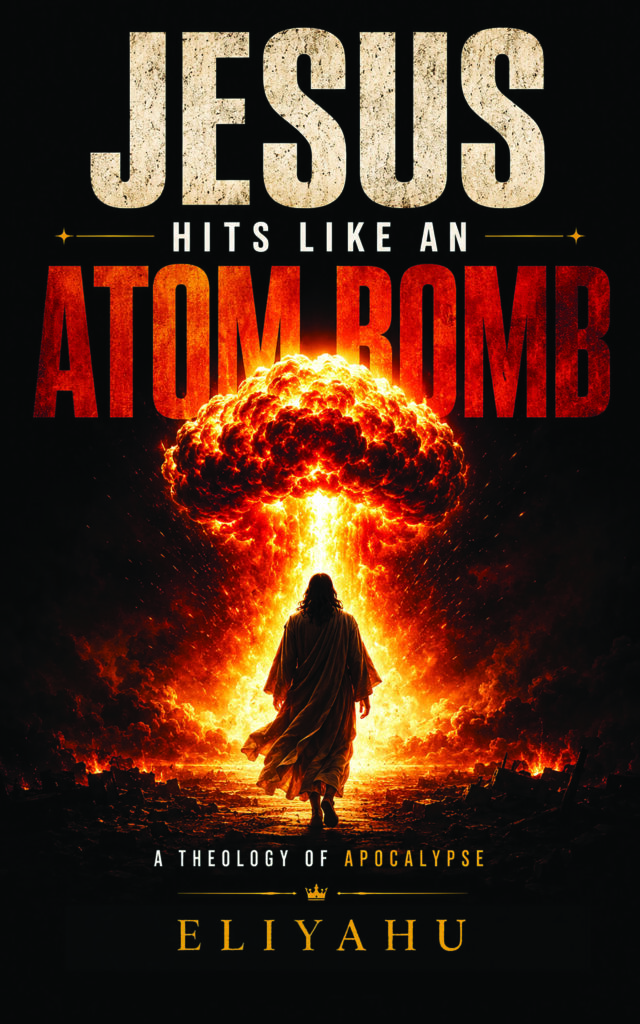
    Cover of Jesus Hits Like an Atom Bomb by Eliyahu, featuring a robed figure and fiery explosion

    The metaphor gets something right

    The nuclear-age gospel metaphor captures suddenness. It captures the feeling of a world changing in an instant. It captures exposure, accountability, vulnerability, and the impossibility of pretending that everything can simply continue as before.

    Those are recognizably apocalyptic themes. Revelation interrupts. Judgment exposes. The curtain is pulled back.

    But the metaphor also carries the violence of the weapon from which it borrows its force. If we are careless, the image can make human destruction look divine and make divine power look like annihilation.

    The book exists inside that tension

    I wanted to ask whether the metaphor could be interpreted without baptizing the bomb. That required going backward into biblical apocalypse, the Day of the Lord, Christian eschatology, and the history of religious waiting. It also required moving forward through the world the bomb helped create.

    The modern apocalyptic imagination is no longer shaped by one mushroom cloud alone. Crisis now arrives through networks: artificial intelligence, algorithms, surveillance, deepfakes, technological displacement, climate disruption, pandemic memory, migration, institutional distrust, conspiracy, political violence, and the weaponization of faith itself.

    In that environment, apocalyptic language can easily become machinery for fear. It can offer false certainty, identify convenient enemies, and turn spiritual vigilance into permanent panic.

    I wanted to recover unveiling

    The deeper reason I wrote the book is that apocalypse has a richer meaning than catastrophe. It can mean unveiling.

    An unveiling does not simply tell us that something terrible is coming. It reveals what is already present: the systems we trusted too easily, the desires shaping us, the people made vulnerable by our arrangements, the stories that no longer hold, and the responsibilities we have avoided.

    Once something has been revealed, the spiritual question changes. We are no longer only asking, “What is happening?” We have to ask, “What will we do with what we now see?”

    That question points beyond this book. Jesus Hits Like an Atom Bomb begins with apocalypse, but I do not want readers to remain at the moment of alarm. I want the work to move toward responsibility, formation, discernment, and repair.

    You can learn more about Jesus Hits Like an Atom Bomb on the Books page.

  • Jesus Hits Like an Atom Bomb Is Now Available

    Jesus Hits Like an Atom Bomb Is Now Available

    Today, Jesus Hits Like an Atom Bomb is available.

    The title is meant to stop us for a moment. It places the Prince of Peace beside one of the most destructive images human beings have ever created. That contradiction is not something the book tries to hide. It is the problem the book enters.

    A metaphor born in the nuclear age

    The phrase “Jesus hits like an atom bomb” emerged in a world still absorbing the shock of Hiroshima and Nagasaki. In postwar gospel music, the bomb became a metaphor for the suddenness, overwhelming force, and inescapability associated with divine judgment and the return of Christ.

    But a metaphor can illuminate one truth while distorting another. The atom bomb can communicate suddenness. It can communicate exposure and finality. It cannot be allowed to turn Christ into a weapon or divine judgment into indiscriminate violence.

    That tension is where the book begins.

    Apocalypse as unveiling

    One of the book’s central arguments is that apocalypse should not be reduced to prediction. The word points toward revelation, disclosure, an unveiling of what was hidden.

    That matters because every generation is tempted to read its own fears as proof that it stands at the absolute end. The nuclear age did it. The Cold War did it. Our own age does it through technological anxiety, climate disruption, institutional distrust, political conflict, artificial intelligence, surveillance, manufactured information, and the sense that crisis has become the atmosphere itself.

    The question is not whether those pressures are real. Many of them are. The question is whether fear helps us see clearly.

    Beyond panic and passivity

    This is not a book about calculating the date of the end. It is about what becomes visible when illusions fail, and what faithful people do with that visibility.

    If apocalypse unveils the fracture, then faith must become more than alarm. It must become discernment, courage, truthfulness, mercy, protection of the vulnerable, and the willingness to rebuild what can still be repaired.

    That is the movement I hope readers find in these pages: from spectacle toward understanding, from fear toward discernment, and from unveiling toward responsibility.

    Jesus Hits Like an Atom Bomb: A Theology of Apocalypse, Technology, and the Courage to Rebuild is available now. Learn more on the Books page.

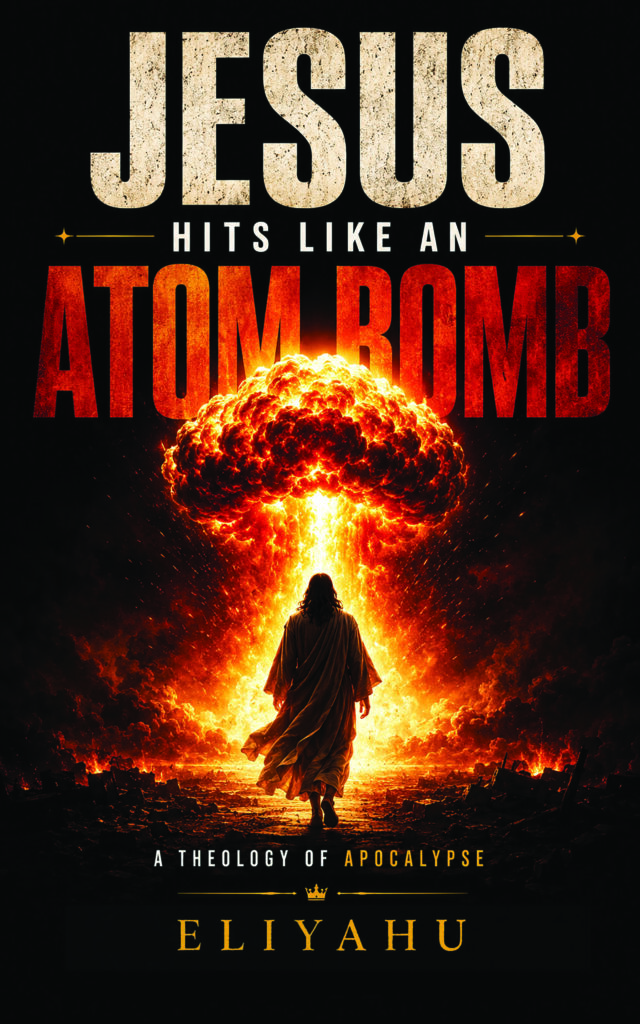
    Cover of Jesus Hits Like an Atom Bomb by Eliyahu, featuring a robed figure and fiery explosion
  • Before the First Book: Where the Eliyahu Project Begins

    Before the First Book: Where the Eliyahu Project Begins

    Before there was a first book, there was a set of questions that kept returning.

    What do we do when inherited language no longer seems large enough for the world we are living in? How do we speak about prophecy without turning it into prediction? How do we speak about apocalypse without feeding fear? How do we honor spiritual experience without confusing experience with certainty?

    Those questions form part of the origin of the Eliyahu project.

    Awakening must lead somewhere

    I am interested in awakening, but not as an endpoint. An experience can open the eyes and still leave a person unchanged. Insight can become another identity, another argument, or another way of feeling superior unless it is tested by what it produces.

    Does it deepen humility? Does it make us more truthful? Does it help us repair what we have damaged? Does it strengthen courage without making us reckless? Does it make us more capable of serving the people and communities actually within our reach?

    For me, prophetic language becomes meaningful when it returns us to those questions.

    The work of discernment

    The traditions I engage contain powerful symbols, visions, warnings, promises, and accounts of divine encounter. They also contain centuries of interpretation. That distinction matters.

    Mystical or prophetic experience does not remove the need for discernment. It increases it. The stronger the claim, the greater the need for humility, testing, context, and responsibility.

    That is one reason this work moves across theology, culture, symbolism, spiritual formation, and public responsibility. The question is never only, “What does this mean?” It is also, “What does this interpretation ask of us, and what happens if we are wrong?”

    Why begin with an atom bomb?

    The first book, Jesus Hits Like an Atom Bomb, begins with an unsettling metaphor born in the nuclear age. After Hiroshima and Nagasaki, the atom bomb became a symbol of suddenness, finality, overwhelming power, and human vulnerability. Gospel music placed that terrifying image beside the return of Christ.

    The phrase is powerful precisely because it is dangerous. It can communicate sudden revelation and accountability, but it can also confuse divine action with human violence. That tension creates the doorway into the larger project.

    What if apocalypse is not mainly a countdown to destruction? What if its older meaning, unveiling, gives us a better starting point? And if the curtain is pulled back, what kind of people should we become because of what we have seen?

    Jesus Hits Like an Atom Bomb releases August 8. It is the first public step in a body of work concerned with awakening, discernment, responsibility, reconciliation, and repair. You can explore the book on the Books page.

  • Meet Eliyahu: The Questions Behind the Work

    Meet Eliyahu: The Questions Behind the Work

    If you are arriving here for the first time, this is a useful place to begin.

    I write at the intersection of prophetic tradition, theology, spiritual transformation, consciousness, and public responsibility. The work draws from the Abrahamic traditions while trying to approach each on its own terms, without pretending that their differences do not matter.

    A prophetic vocation larger than prediction

    When people hear the word “prophetic,” they often think first about prediction. My concern is different. I am interested in prophetic vocation as a discipline of truthfulness, discernment, reconciliation, protection, and repair.

    What does it mean to recognize that something is wrong without becoming consumed by fear? What does it mean to encounter the sacred without turning experience into spiritual superiority? What kind of person can remain courageous, merciful, and responsible when familiar structures begin to strain?

    Those questions run through the work. They lead into biblical and theological reflection, but they also lead outward toward relationships, institutions, technology, culture, community, and the responsibilities we carry in ordinary life.

    Ancient language, contemporary pressure

    The prophetic traditions were formed in a world marked by past and present political upheaval, exile, violence, social fracture, moral confusion, and the struggle to remain faithful under pressure. Our world looks different, but many of the human questions remain recognizable.

    Today we face accelerating technology, information systems that shape attention, deep institutional distrust, ecological pressure, social fragmentation, and a constant stream of crisis. In that environment, inherited religious language can either become another source of fear or become a resource for discernment and responsible action.

    I want this work to contribute to the second possibility.

    What this work is trying to serve

    Across the books and essays that will appear here, I will return to a set of recurring concerns: prophetic identity, symbolism, metaphysics, discernment, reconciliation, spiritual formation, public responsibility, and the ethical demands that arise when something has been revealed to us.

    The goal is not to produce another system of certainty. It is to ask how inherited wisdom might form people capable of truthfulness, courage, mercy, discernment, meaningful action, and repair.

    My first book arrives on August 8. Its title is Jesus Hits Like an Atom Bomb, and it begins with one of the strangest religious metaphors of the nuclear age. The title is provocative on purpose, but the deeper concern is not spectacle. It is what apocalypse reveals, what fear distorts, and what faithful people do once the curtain has been pulled back.

    You can learn more about the larger body of work on the About page and explore current titles on the Books page.