
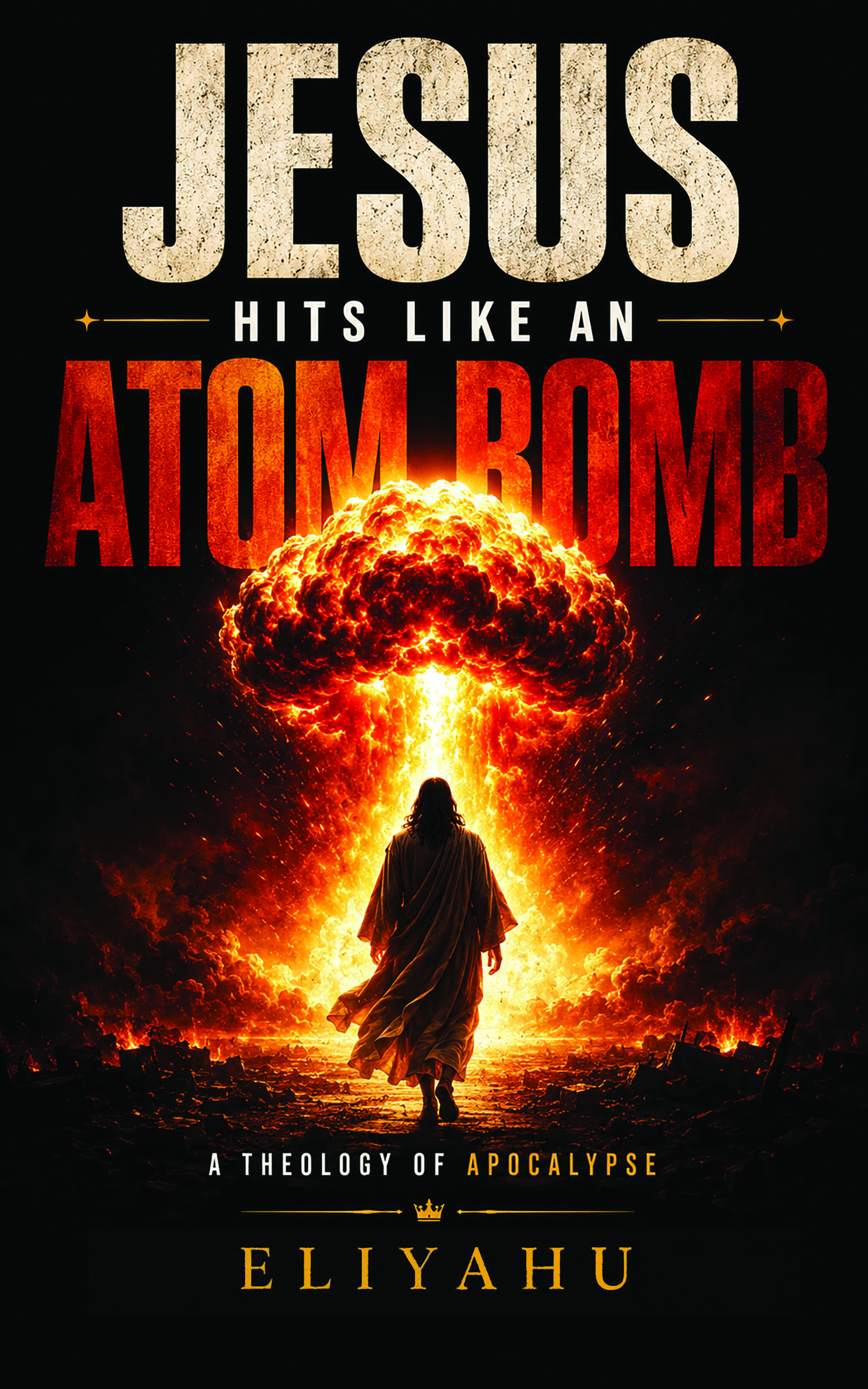
Why write a book called Jesus Hits Like an Atom Bomb?
Because the phrase would not leave me alone.
It carries a theological contradiction in a few words. Jesus is named through the image of a weapon capable of destroying a city. The metaphor is arresting, memorable, and deeply unsettling. That is precisely why it deserves examination rather than repetition.
The metaphor gets something right
The nuclear-age gospel metaphor captures suddenness. It captures the feeling of a world changing in an instant. It captures exposure, accountability, vulnerability, and the impossibility of pretending that everything can simply continue as before.
Those are recognizably apocalyptic themes. Revelation interrupts. Judgment exposes. The curtain is pulled back.
But the metaphor also carries the violence of the weapon from which it borrows its force. If we are careless, the image can make human destruction look divine and make divine power look like annihilation.
The book exists inside that tension
I wanted to ask whether the metaphor could be interpreted without baptizing the bomb. That required going backward into biblical apocalypse, the Day of the Lord, Christian eschatology, and the history of religious waiting. It also required moving forward through the world the bomb helped create.
The modern apocalyptic imagination is no longer shaped by one mushroom cloud alone. Crisis now arrives through networks: artificial intelligence, algorithms, surveillance, deepfakes, technological displacement, climate disruption, pandemic memory, migration, institutional distrust, conspiracy, political violence, and the weaponization of faith itself.
In that environment, apocalyptic language can easily become machinery for fear. It can offer false certainty, identify convenient enemies, and turn spiritual vigilance into permanent panic.

I wanted to recover unveiling
The deeper reason I wrote the book is that apocalypse has a richer meaning than catastrophe. It can mean unveiling.
An unveiling does not simply tell us that something terrible is coming. It reveals what is already present: the systems we trusted too easily, the desires shaping us, the people made vulnerable by our arrangements, the stories that no longer hold, and the responsibilities we have avoided.
Once something has been revealed, the spiritual question changes. We are no longer only asking, “What is happening?” We have to ask, “What will we do with what we now see?”
That question points beyond this book. Jesus Hits Like an Atom Bomb begins with apocalypse, but I do not want readers to remain at the moment of alarm. I want the work to move toward responsibility, formation, discernment, and repair.
You can learn more about Jesus Hits Like an Atom Bomb on the Books page.